Advertisement

Advertisement

Articles

Artificial Intelligence in the Evaluation and Management of Chronic Low Back Pain

Teaser: 

Ted Findlay, DO, CCFP, FCFP,

Clinical Associate Professor, Program Director, Family Medicine Chronic Pain Enhanced Skills R3, Department of Family Medicine, University of Calgary, Calgary, AB.


CLINICAL TOOLS

Abstract: Background: Artificial intelligence (AI) is increasingly being incorporated into the evaluation and management of chronic low back pain (cLBP), with applications ranging from diagnostic imaging to clinical decision support and digital therapeutics.
Objective: To review current evidence regarding the role of AI in the assessment and management of cLBP and discuss its potential benefits, limitations, and future clinical applications.
Methods: A narrative review of recent peer-reviewed literature examining AI-assisted diagnostic tools, machine learning prediction models, clinical decision support systems, and AI-enabled therapeutic interventions.
Results: AI demonstrates promising performance in lumbar imaging interpretation, prognostic modelling, and individualized digital self-management. However, most applications remain in early clinical development, with limited external validation, concerns regarding bias, interpretability, privacy, and regulatory oversight.
Conclusions: AI should currently be viewed as an adjunct to—not a replacement for—clinical judgement. Broader adoption will require rigorous validation, transparent governance, and continued emphasis on patient-centred care.
Key Words: artificial intelligence; chronic low back pain; digital therapeutics; clinical decision support; musculoskeletal medicine; primary care.

Members of the College of Family Physicians of Canada may claim MAINPRO-M2 Credits for this unaccredited educational program.

www.cfpc.ca/Mainpro_M2

You can take quizzes without subscribing; however, your results will not be stored. Subscribers will have access to their quiz results for future reference.

• AI applications in cLBP have advanced rapidly, particularly in imaging analysis, prognostic modelling, and digital therapeutics.
• Most published algorithms require further external validation before routine clinical implementation.
• AI should augment—not replace—clinical judgement.
• The successful integration of AI into musculoskeletal care will depend on rigorous validation, transparent governance, equitable implementation, and continued emphasis on patient-centred care.
1. AI currently performs best as a clinical decision-support tool, not an autonomous clinician.
2. Automated lumbar MRI interpretation has achieved diagnostic accuracy approaching expert radiologists but must always be interpreted in clinical context.
3. AI-enabled digital therapeutics can modestly improve pain-related disability and patient self-management when used alongside usual care.
4. Clinicians should remain vigilant regarding algorithmic bias, limited external validation, privacy concerns, and generative AI hallucinations.
5. Human clinical judgement, empathy, and shared decision-making remain indispensable in the management of chronic low back pain.
To have access to full article that these tools were developed for, please subscribe. The cost to subscribe is $80 USD per year and you will gain full access to all the premium content on www.healthplexus.net, an educational portal, that hosts 1000s of clinical reviews, case studies, educational visual aids and more as well as within the mobile app.

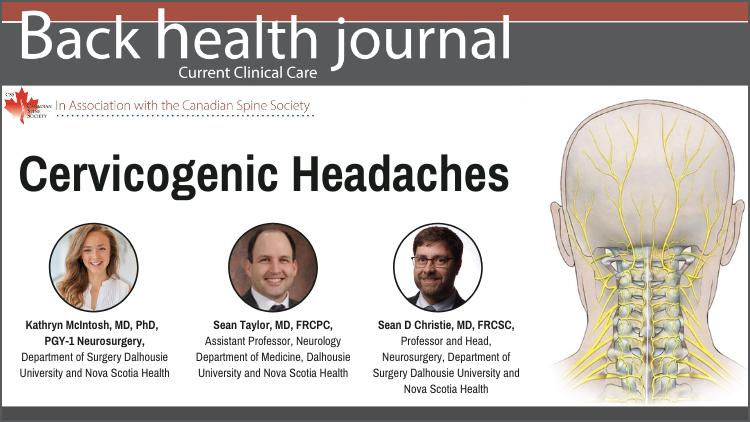
Cervicogenic Headaches: Practical Considerations for Prevention, Diagnosis, and Management in Primary Care

Teaser: 

Kathryn McIntosh, MD, PhD, PGY-1 Neurosurgery,1 Sean Taylor, MD, FRCPC,2 Sean D Christie, MD, FRCSC,3

1From Departments of Surgery Dalhousie University and Nova Scotia Health
2Assistant Professor, Neurology From Departments of Medicine, Dalhousie University and Nova Scotia Health
3Professor and Head, Neurosurgery From Departments of Surgery, Dalhousie University and Nova Scotia Health


CLINICAL TOOLS

Abstract: Treatment-refractory headache results in chronic, function-limiting pain despite multiple trials of preventive and abortive therapies. Among adults evaluated for headache, cervicogenic headache represents an important but relatively uncommon cause of headache, representing 4% of cases, with a female predominance. Identifying cervicogenic headache is clinically significant as it localizes the pain source to the cervical spine, guiding targeted, spine-focused management and avoiding ineffective treatments and unnecessary investigations.
As interest and evidence expand, there is a greater need to translate current knowledge into practical guidelines. We highlight the most current evidence regarding prevention, diagnosis and management of cervicogenic headache.
Key Words: Cervicogenic headache, neck pain, unilateral headache, cervical spine.

Members of the College of Family Physicians of Canada may claim MAINPRO-M2 Credits for this unaccredited educational program.

www.cfpc.ca/Mainpro_M2

You can take quizzes without subscribing; however, your results will not be stored. Subscribers will have access to their quiz results for future reference.

Cervicogenic headaches are secondary headaches that originate from pathology in the upper cervical spine for which headache relief can be achieved through spine-focused therapy.
Prevention of cervicogenic headache involves addressing modifiable factors that support spinal health, including smoking cessation, regular physical activity, maintaining a healthy weight and adequate sleep.
Diagnosis of cervicogenic headache is primarily clinical and may be supported by response to targeted cervical interventions, including manual physical therapy or diagnostic nerve blocks.
Treatment of cervicogenic headache is primarily conservative and multimodal, with the strongest evidence supporting manual physical therapy. Radiofrequency ablation may be considered in select cases, evidence for other interventions remains limited.
The cervical flexion–rotation test selectively assesses C1–C2 mobility and is a quick, low-risk bedside maneuver. Marked asymmetry or reproduction of the patient’s familiar headache during the test strongly supports an upper cervical pain generator.
While not diagnostic, reproduction of a patient’s headache with firm palpation or sustained pressure over the upper cervical spine or suboccipital region can support a cervical source of pain.
Many patients with cervicogenic headache are individuals with prolonged, static neck positions such as smartphone-related neck flexion or “text neck”. A history of neck injury is also common.
To have access to full article that these tools were developed for, please subscribe. The cost to subscribe is $80 USD per year and you will gain full access to all the premium content on www.healthplexus.net, an educational portal, that hosts 1000s of clinical reviews, case studies, educational visual aids and more as well as within the mobile app.

Pre-Operative Mental Health as a Predictor of Post-Operative Psychological Wellbeing

Teaser: 

Katie Applegarth, BSc Candidate,1 Morgan Tidler, BSc Candidate,2 Emily K Schaeffer, PhD,3 Caitlyn Dunphy, MPT,4 Andrea Mary Simmonds, MD, MHSc, FRCS(C),5

1University of British Columbia, Department of Orthopaedic Surgery, BC Children’s Hospital
2University of British Columbia, Department of Orthopaedic Surgery, BC Children’s Hospital
3University of British Columbia, BC Children’s Hospital
4BC Children’s Hospital
5University of British Columbia, Department of Orthopaedic Surgery, BC Children’s Hospital


CLINICAL TOOLS

Abstract: Patients undergoing fusion surgery for adolescent idiopathic scoliosis often experience significant psychological distress. The aim of this scoping review was to synthesize existing evidence to clarify the relationship between pre-operative mental health and post-operative psychological function. From an original 1616 studies identified by the database search, nine studies met the inclusion criteria. These grouped into four mental health categories: mental health disorders, pain catastrophizing, predictors of post-operative mental health, and psychological interventions. This scoping review identified a prominent connection between pre-operative and post-operative mental health scores. These findings encourage the use of pre-operative psychological assessments and recommend future research related to perioperative psychological interventions.
Key Words: Adolescent Idiopathic Scoliosis (AIS), Fusion Surgery, Mental Health, Psychological Wellbeing.

Members of the College of Family Physicians of Canada may claim MAINPRO-M2 Credits for this unaccredited educational program.

www.cfpc.ca/Mainpro_M2

You can take quizzes without subscribing; however, your results will not be stored. Subscribers will have access to their quiz results for future reference.

1. Poor pre-operative mental health is a predictor of poor post-operative psychological wellbeing.
2. Pre-operative assessments can be used to help identify patients who would benefit from extra support.
3. Psychological interventions may help mitigate poor perioperative psychological function.
4. Psychological function improved by 2-year post-operative follow-up.
Pre-operative psychological assessments and surveys can help identify patients with poorer mental health scores. Identified patients can be provided with psychological interventions or coping strategies to help mitigate poor perioperative psychological function.
Patients with poor pre-operative mental health scores should be monitored post-operatively to ensure smooth post-operative recovery.
Psychological interventions and coping strategies should be tailored to best fit the personal preference of patients. Ongoing research should continue to be conducted regarding the efficacy of different perioperative interventions and coping strategies.
Psychological function may decrease in the immediate post-operative period, but then improves by 2-year post-operative follow-up. This suggests that perioperative stress may contribute to temporary decreases in psychological function.
To have access to full article that these tools were developed for, please subscribe. The cost to subscribe is $80 USD per year and you will gain full access to all the premium content on www.healthplexus.net, an educational portal, that hosts 1000s of clinical reviews, case studies, educational visual aids and more as well as within the mobile app.

New Antibiotics Provide a Glimmer of Hope as Older Drugs Grapple With Resistance

Teaser: 

1Nsisong Asanga, MBBCh, MPH, FIMC,

is a physician, field epidemiologist, and freelance health writer whose work has been published by BioSpace, Yahoo, AARP, WebMD, VeryWell, Healthline, Parents, SELF, Health, Insider, The Independent, and other platforms.

CLINICAL TOOLS

Abstract: Antimicrobial resistance (AMR) poses an escalating global threat, with superbugs such as MRSA, carbapenem-resistant Enterobacteriaceae, and multidrug-resistant Neisseria gonorrhoeae challenging modern clinical practice. Antibiotic development has stalled due to economic disincentives, regulatory barriers, and scientific complexity. Emerging strategies—including soil-derived compounds such as teixobactin, AI-assisted drug discovery (halicin, abaucin), phage therapy, and novel membrane-disrupting agents—offer cautious optimism. Stewardship, genomic surveillance, and diagnostics remain essential complements to new therapies.
Key Words: antimicrobial resistance (AMR), antibiotic discovery, AI-driven drug design, antimicrobial stewardship.
AMR is an accelerating crisis: The WHO projects AMR could cause up to 10 million deaths annually by 2050, surpassing cancer mortality. Superbugs including MRSA, carbapenem-resistant Enterobacteriaceae, and ceftriaxone-resistant gonorrhea are already threatening routine clinical procedures.
The antibiotic pipeline has been dangerously thin: No novel antibiotic class was discovered and approved between 1987 and 2020. Economic disincentives—including low ROI, short market life (2–3 years before resistance emerges), and costly Phase 3 trial requirements—deter pharmaceutical investment.
Novel discovery platforms are showing promise: Soil-derived teixobactin (Phase 1 safety confirmed in 2024), AI-designed halicin (effective against 35/36 resistant organisms in vitro), and phage therapy agents represent mechanistically distinct pipelines that could outpace traditional resistance evolution.
Stewardship and diagnostics are non-negotiable complements: New antibiotics alone cannot solve AMR. Robust stewardship programs, rapid diagnostics, microbiome-aware prescribing, and global genomic surveillance are required to preserve the efficacy of both current and emerging agents.
The empirical prescribing dilemma is real but manageable: Clinicians face pressure between starting empirical antibiotics (which drives resistance) and waiting for culture results (which delays care). Integrating rapid diagnostics and leveraging AI-assisted resistance pattern analysis can narrow this window, enabling more targeted, timely therapy without reflexively broadening antibiotic coverage.
Stewardship is not the enemy of care: Reserving new agents as ‘last resort’ therapies is clinically rational, but must not translate into access delays for patients with resistant infections. Hospitals should embed stewardship pharmacists and infectious disease consultants in high-risk pathways (oncology, surgery, ICU) to optimize drug selection, dosing, and duration — ensuring that when novel antibiotics arrive, prescribers are already equipped to deploy them appropriately.
To have access to full article that these tools were developed for, please subscribe. The cost to subscribe is $80 USD per year and you will gain full access to all the premium content on www.healthplexus.net, an educational portal, that hosts 1000s of clinical reviews, case studies, educational visual aids and more as well as within the mobile app.
Disclaimer: 
Disclaimer at the end of each page

AI Is Already Here. Physician Leadership Isn’t—Yet

Teaser: 

1Dr. Jane Purvis, MD, FRCP(C), 2Dr. Chandi Chandrasena, CCFP FCFP,

1is a rheumatologist, the former Co-Chair of the OMA PSC, and the Government Affairs Lead for the Ontario Rheumatology Association. 2is a family physician, lecturer at the University of Ottawa and Chief Medical Office, OntarioMD.

CLINICAL TOOLS

Abstract: AI is rapidly integrating into Ontario’s healthcare system, offering benefits like reduced administrative burden and improved clinical decision-making, but carrying significant risks including patient safety concerns, equity gaps, and erosion of primary care. Effective, physician-led governance is essential to ensure AI complements rather than replaces human-centred care.
Key Words: Artificial intelligence, physician governance, primary care, health equity.
1. AI tools are already embedded in Ontario’s clinical environments, often adopted without independent evaluation or robust local validation.
2. While AI scribes and clinical decision-support systems offer real efficiency gains, risks include hallucinations, diagnostic errors, and erosion of the therapeutic relationship.
3. Poorly governed AI threatens to fragment longitudinal primary care, which depends on continuity, trust, and contextual knowledge that algorithms cannot replicate.
4. Equitable AI implementation requires inclusive training data, privacy safeguards, and deliberate policy oversight—market forces alone are insufficient.
AI supplements, never substitutes: AI chatbots process snapshots of information and lack relational memory or accountability — patients who arrive with AI-formed diagnoses may need careful, time-conscious counselling to realign expectations.
Document AI-influenced encounters carefully: AI scribes can introduce inaccuracies into the medical record; physicians retain medicolegal responsibility and should review all AI-generated documentation before signing.
To have access to full article that these tools were developed for, please subscribe. The cost to subscribe is $80 USD per year and you will gain full access to all the premium content on www.healthplexus.net, an educational portal, that hosts 1000s of clinical reviews, case studies, educational visual aids and more as well as within the mobile app.
Disclaimer: 
Disclaimer at the end of each page

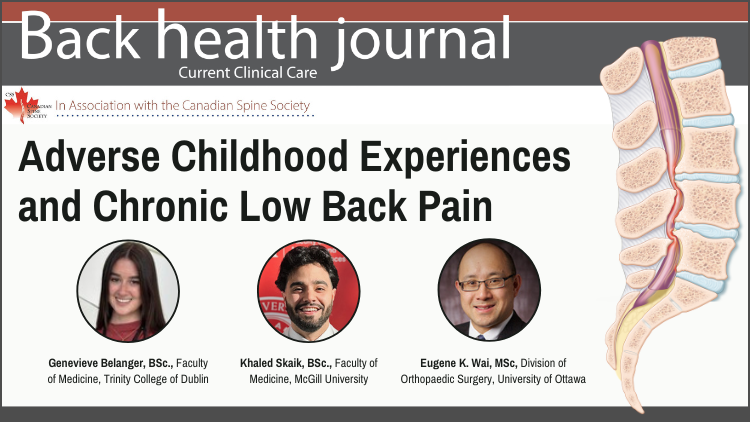
Adverse Childhood Experiences and Chronic Low Back Pain

Teaser: 

Genevieve Belanger, BSc.,1 Khaled Skaik, BSc.,2 Eugene K. Wai, MD, MSc, FRCSC, CIP3

1 Faculty of Medicine, Trinity College of Dublin
2 Faculty of Medicine, McGill University 3Associate Professor, University of Ottawa Division of Orthopaedic Surgery Cross Appointed to School of Epidemiology and Public Health Attending Surgeon, Ottawa Hospital Spinal Surgery Program


CLINICAL TOOLS

Abstract: While adverse childhood experiences (ACE) is a risk for chronic pain broadly, their specific association with chronic low back pain (cLBP) and recommended management remains unclear. We conducted a systematic review and demonstrated substantial heterogeneity reflecting methodological variability and inconsistent results. However, there was moderate evidence that increasing number of ACE and emotional abuse was associated with cLBP. This suggests a need for an individualized biopsychosocial approach to management with best practice of a trauma informed approach.
Key Words: low back pain, chronic pain, adverse childhood experiences, childhood adversity, systematic review, meta-analysis.

Members of the College of Family Physicians of Canada may claim MAINPRO-M2 Credits for this unaccredited educational program.

www.cfpc.ca/Mainpro_M2

You can take quizzes without subscribing; however, your results will not be stored. Subscribers will have access to their quiz results for future reference.

Adverse childhood experiences (ACE) are any preventable act that results in harm, or potential for harm to a child. ACE include but are not limited to, direct acts or witnessing of various forms of abuse, including physical, mental, emotional and sexual
ACE is a risk factor for chronic pain and our systematic review demonstrate moderate evidence that increasing ACE and emotional abuse specifically
A holistic biopsychosocial approach is critical in the management of chronic low back pain CLBP in the setting of ACE
Consider assessing for ACEs in the management of CLBP, especially if there is failure of a biomedical focused approach.
Patients with ACE are at risk for further harm and it is recommended that a trauma informed care approach should be used.
To have access to full article that these tools were developed for, please subscribe. The cost to subscribe is $80 USD per year and you will gain full access to all the premium content on www.healthplexus.net, an educational portal, that hosts 1000s of clinical reviews, case studies, educational visual aids and more as well as within the mobile app.

Caring for Patients and the Planet: Strategies for Sustainable Primary Care

Teaser: 

Kelachi Nsitem, MSc (Clin Epi), MD Candidate,1 Sean D Christie, MD, FRCSC,2

1McMaster University, Class of 2028
2Head, Division of Neurosurgery and Sustainability Leader, Dalhousie University and Nova Scotia Health.


CLINICAL TOOLS

Abstract: Primary care plays a pivotal role in reducing healthcare’s environmental footprint while maintaining high-quality, patient-centred care. Clinician decisions regarding diagnostic testing, medication and operational workflows directly and indirectly influence resource use, carbon emissions and overall planetary health. This paper explores strategies to promote sustainable primary care, organized into clinical and non-clinical domains. Clinical interventions include minimizing low-value care and adopting appropriate, environmentally-conscious prescribing practices. Non-clinical approaches focus on virtual care, operational efficiency, and sustainable procurement. Tailoring strategies to practice context and team capacity enables feasible implementation, yielding benefits for both patient outcomes and environmental sustainability.
Key Words: sustainable healthcare, primary care, environmental impact, climate change mitigation, population health.

Members of the College of Family Physicians of Canada may claim MAINPRO-M2 Credits for this unaccredited educational program.

www.cfpc.ca/Mainpro_M2

You can take quizzes without subscribing; however, your results will not be stored. Subscribers will have access to their quiz results for future reference.

Hip fractures in the elderly lead to a 17–30% one-year mortality.
Primary care contributes to healthcare’s environmental footprint but is well positioned to lead sustainability efforts
Reducing low-value care and optimizing prescribing practices will improve patient outcomes and reduce care-associated emissions
Virtual care and operational modifications are practical strategies to minimize emissions from travel, energy use, and consumables
Feasibility varies by practice setting; strategies should be adapted to rural, urban, small team, and interprofessional clinic contexts
Choosing Wisely Canada recommendations support reduction of unnecessary tests and procedures.
Implementing hybrid or virtual care models reduces patient and staff travel, improving access and decreasing carbon emissions, particularly in rural populations.
Simple operational changes, such as using reusable instruments, reducing disposable gloves, and minimizing table paper, can meaningfully lower clinic environmental impact
To have access to full article that these tools were developed for, please subscribe. The cost to subscribe is $80 USD per year and you will gain full access to all the premium content on www.healthplexus.net, an educational portal, that hosts 1000s of clinical reviews, case studies, educational visual aids and more as well as within the mobile app.

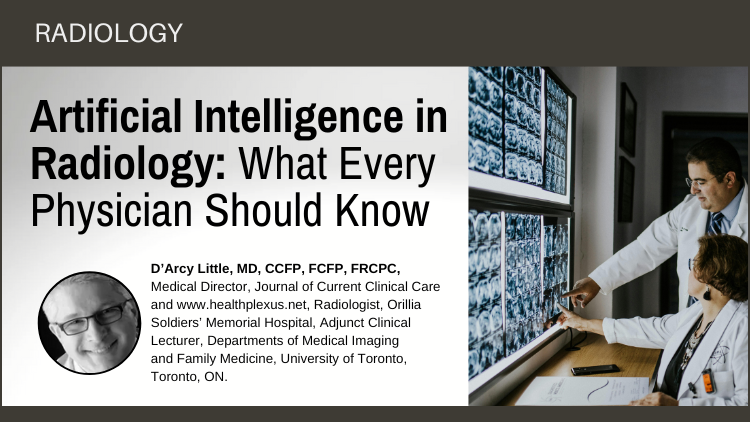
Artificial Intelligence in Radiology: What Every Physician Should Know

Teaser: 

D'Arcy Little MD CCFP FCFP FRCPC,

D’Arcy Little, MD, CCFP, FCFP, FRCPC, Medical Director, Journal of Current Clinical Care and www.healthplexus.net, Radiologist, Orillia Soldiers’ Memorial Hospital, Adjunct Clinical Lecturer, Departments of Medical Imaging and Family Medicine, University of Toronto, Toronto, ON.

CLINICAL TOOLS

Abstract:
Artificial intelligence is rapidly being integrated into radiology practice, with over 1,000 AI-enabled devices now authorized by regulatory agencies worldwide. For referring physicians, understanding AI’s role in medical imaging is increasingly important, as these technologies affect report turnaround times, diagnostic accuracy, and clinical workflows. This article provides a practical overview of current AI applications in radiology, including automated detection of critical findings like pulmonary embolism and intracranial hemorrhage, enhanced cancer screening, and workflow optimization. AI tools assist radiologists in identifying abnormalities that might be missed, quantifying disease burden, and prioritizing urgent cases. However, AI augments rather than replaces radiologist expertise, and all findings require human verification. Future applications will extend beyond diagnosis to include predictive analytics, personalized imaging protocols, and integration with other clinical data sources. Physicians should understand that while AI enhances radiology services, it does not eliminate the need for appropriate clinical context in imaging requests or careful correlation of imaging findings with patient presentation. As AI adoption accelerates, collaboration between referring physicians and radiologists remains essential for optimal patient care.

Key Words: Artificial Intelligence (AI), radiology workflow, diagnostic accuracy, clinical integration.
AI enhances but doesn’t replace radiologists—Over 750 AI-enabled radiology devices are now approved, but they serve as assistive tools that flag findings for radiologist review rather than making final diagnoses. All AI findings require human verification and expert interpretation.
Faster detection of critical findings—AI algorithms can identify urgent conditions like pulmonary embolism, intracranial hemorrhage, and pneumothorax within seconds, enabling prioritization and reducing time-to-diagnosis for critical findings by 30-50% in some institutions.
Improved cancer screening performance—AI assistance increases mammography screening detection rates from 92% to 97%, helping identify small cancers that might otherwise be missed and providing consistent attention to every image.
Clinical context remains essential—Despite AI capabilities, detailed clinical information on imaging requisitions is still crucial, as AI analyzes image patterns but doesn’t understand clinical context the way radiologists do when interpreting findings.
Continue providing comprehensive clinical history—AI doesn’t diminish the importance of detailed clinical information on requisitions. Your description of symptoms, relevant history, and specific clinical questions directly impacts the radiologist’s ability to provide useful interpretations, even with AI support.
Don’t assume all findings are AI-detected—Most radiology reports don’t specifically mention AI use. The radiologist synthesizes information from multiple sources to create comprehensive interpretations, so maintain the same level of clinical correlation with imaging findings as you always have.
Communicate directly for complex cases—If imaging findings don’t match your clinical expectations, contact the radiologist directly. This person-to-person communication remains valuable for complex cases regardless of AI involvement and ensures optimal patient care.
To have access to full article that these tools were developed for, please subscribe. The cost to subscribe is $80 USD per year and you will gain full access to all the premium content on www.healthplexus.net, an educational portal, that hosts 1000s of clinical reviews, case studies, educational visual aids and more as well as within the mobile app.
Disclaimer: 
Disclaimer at the end of each page

Risk Assessment, Prevention, and Treatment in Osteoporosis-Related Fractures

Teaser: 

Yan Gabriel Morais David Silva, MD,1 Ramon Guerra Barbosa, MD,2 Martin Kotochinsky, MD,3Lara Barbosa de Souza Moura Canas Lara, MS,4 Cloud Kennedy Couto de Sa, MD, PhD,5 Lucas Leal Varjão, MD,6 Kaike Lobo, MS,7 Eshita Sharma, MS,8Yasmin Picanço Silva, MD,9 Luis Fernando Weber de Oliveira, MD,10 Walter Fagundes, MD, PhD,11 Newton Godoy Pimenta, MD, PhD,12

1Spine Surgery - Hospital Ortopédico do Estado (Soc. Ben. Israelita Albert Einstein), Salvador, Bahia, Brazil.
2 Department of Neurosurgery, Hôpital de Chicoutimi, Quebec, Canada.

3 Department of Medicine, National University of Cuyo, Mendoza, Argentina.

4 State University of Feira de Santana (UEFS), Feira de Santana, Brazil.

5 Hospital Ortopédico do Estado (Soc. Ben. Israelita Albert Einstein), Salvador, Bahia, Brazil.
6 Hospital Ortopédico do Estado (Soc. Ben. Israelita Albert Einstein), Salvador, Bahia, Brazil.
7 State University of Pará, Belém, Brazil.
8 David Geffen School of Medicine at UCLA, Los Angeles, USA.
9 Healthcare Institution of South Iceland, Selfoss, Iceland.
10 Spine Surgery - Hospital Ortopédico do Estado (Soc. Ben. Israelita Albert Einstein), Salvador, Bahia, Brasil.
11 Department of Neurosurgery, Federal University of Espírito Santo, Espírito Santo, Vitória, Brazil.
12 Neurosurgery Division, University of Sherbrooke, Sherbrooke, Canada.

CLINICAL TOOLS

Abstract: Osteoporosis-related fractures represent a growing global health burden, requiring comprehensive strategies that span risk assessment, prevention, pharmacologic therapy, and surgical care. Dual-energy X-ray absorptiometry (DEXA) remains the diagnostic standard. However, fracture prediction improves when combined with clinical risk models, such as the Fracture Risk Assessment Tool (FRAX), QFracture, Garvan Risk Calculator, or a simplified assessment created by the Canadian Association of Radiologists and Osteoporosis Canada (CAROC). Effective prevention should be approached across the lifespan, maximizing peak bone mass in youth and attenuating later loss through lifestyle modifications. Pharmacologic therapy remains central to proper management while the treatment sequence, duration, and adverse effects necessitate individualized decision-making. In primary care, targeted screening of at-risk populations, systematic use of fracture risk calculators, prompt initiation of secondary prevention after sentinel fractures, and integration of multidisciplinary models are paramount.
Key Words: Osteoporosis, fragility fractures, DEXA, fracture risk calculators, pharmacologic therapy.

Members of the College of Family Physicians of Canada may claim MAINPRO-M2 Credits for this unaccredited educational program.

www.cfpc.ca/Mainpro_M2

You can take quizzes without subscribing; however, your results will not be stored. Subscribers will have access to their quiz results for future reference.

Hip fractures in the elderly lead to a 17–30% one-year mortality.
The DEXA scan is the gold standard for identifying osteoporosis but fracture risk tools assist management.
Prevention includes early bone mass optimization; lifestyle measures and fall prevention in elderly.
Bisphosphonates are the first-line pharmacologic treatment.
Most vertebral fractures are treated conservatively; vertebroplasty/kyphoplasty should only be used for persistent pain.
About two thirds of vertebral fractures are silent so screening at-risk patients is important.
Calcium plus Vitamin D is more effective than calcium alone.
Fall-prevention strategies in the elderly such as balance, strength and environment modification reduce fracture risk more than drugs do.
To have access to full article that these tools were developed for, please subscribe. The cost to subscribe is $80 USD per year and you will gain full access to all the premium content on www.healthplexus.net, an educational portal, that hosts 1000s of clinical reviews, case studies, educational visual aids and more as well as within the mobile app.

Vertebral Compression Fractures and Osteoporosis

Teaser: 

Zain Nassrullah, 1 Germain Sophie Ngana MD, PhD,2 Markian Pahuta MD, PhD, FRCSC,3Mohammad Zarrabian MD, FRCSC,4 Daipayan Guha MD, PhD, FRCSC,5

1Faculty of Health Sciences, McMaster University, Hamilton, ON, Canada.
2 Faculty of Health Sciences, McMaster University, Hamilton, ON, Canada.

3 Division of Orthopedic Surgery, Department of Surgery, McMaster University, Hamilton, ON, Canada.

4 Division of Orthopedic Surgery, Department of Surgery, McMaster University, Hamilton, ON, Canada.

5 Division of Neurosurgery, Department of Surgery, McMaster University, Hamilton, ON, Canada.

CLINICAL TOOLS

Abstract: Osteoporosis and vertebral compression fractures are commonly encountered pathologies that can have a significant impact on mobility, quality of life, and overall morbidity. Here we review the diagnosis, epidemiology, and risk factors of osteoporosis, as well as the most recent recommendations for primary and secondary prevention. Additionally, the current treatment approaches of vertebral compression fractures are discussed, including the roles of non-operative and operative management, indications for surgical intervention, and the evidence available to support treatment decisions.
Key Words: osteoporosis, VCF, vertebroplasty, kyphoplasty.

Members of the College of Family Physicians of Canada may claim MAINPRO-M2 Credits for this unaccredited educational program.

www.cfpc.ca/Mainpro_M2

You can take quizzes without subscribing; however, your results will not be stored. Subscribers will have access to their quiz results for future reference.

Osteoporosis has a very large disease burden in Canada, and vertebral compression fractures are one of its most common complications.
The Fracture Risk Assessment Tool (FRAX) should be used to calculate a 10-year risk of fractures in order to guide the management of osteoporosis.
A vertebral compression fracture should be suspected in patients with a history of osteoporosis presenting with acute low back pain.
Operative treatment options of vertebral compression fractures include vertebroplasty and kyphoplasty, both of which have been shown to be safe and efficacious in clinical trials.
Physical activity as tolerated should be encouraged as part of a conservative approach to managing a vertebral compression fracture.
Plain radiographs can be used to assess for the presence of vertebral compression fractures, while MRI sequences can be used in determining the acuity of vertebral compression fractures.
Vertebral augmentation is indicated in vertebral compression fractures if the pain is intractable and limits ambulation despite appropriate analgesic therapy.
To have access to full article that these tools were developed for, please subscribe. The cost to subscribe is $80 USD per year and you will gain full access to all the premium content on www.healthplexus.net, an educational portal, that hosts 1000s of clinical reviews, case studies, educational visual aids and more as well as within the mobile app.