Advertisement

Advertisement

Alzheimer

Lecanemab (Leqembi®) in Early Alzheimer’s Disease: A Clinical Guide for Family Physicians in Canada

Teaser: 

D'Arcy Little MD CCFP FCFP FRCPC,

D’Arcy Little, MD, CCFP, FCFP, FRCPC, Medical Director, Journal of Current Clinical Care and www.healthplexus.net Radiologist, Orillia Soldiers’ Memorial Hospital, Assistant Professor, Department of Medical Imaging cross-appointed to Department of Family and Community Medicine, University of Toronto, University of Toronto, Toronto, ON.

CLINICAL TOOLS

Abstract:
Lecanemab (Leqembi®), approved by Health Canada in October 2025, represents Canada’s first disease-modifying therapy for Alzheimer’s disease. This guide reviews patient selection criteria, including mandatory APOE genotyping and amyloid biomarker confirmation, for adults with mild cognitive impairment or mild dementia due to Alzheimer’s disease. Key safety considerations include amyloid-related imaging abnormalities (ARIA), requiring rigorous MRI surveillance protocols. Family physicians play essential roles in early identification, coordinating pre-treatment workups, monitoring for adverse events, and providing collaborative care throughout treatment.

Key Words: Lecanemab, Alzheimer’s disease, amyloid-related imaging abnormalities (ARIA), APOE genotyping, disease-modifying therapy.
Patient Selection: Indicated for adults aged 50-90 with MCI or mild dementia due to Alzheimer’s disease, confirmed amyloid pathology (PET or CSF), and MMSE 22-30. APOE ε4 homozygotes excluded due to elevated ARIA risk.
Pre-Treatment Requirements: Mandatory APOE genotyping, amyloid confirmation, and baseline MRI. Patients with ≥5 microbleeds, macrohemorrhage, superficial siderosis, or anticoagulant use are excluded.
ARIA Monitoring: Imaging abnormalities occur in 13% (edema) and 17% (hemorrhage) of patients, mostly asymptomatic. MRI surveillance required at weeks 4, 8, 12, 26, and 52.
Clinical Efficacy: 27% relative reduction in cognitive decline at 18 months, representing approximately 4-5 months of delayed progression compared to placebo.
NO tPA with ARIA: Patients presenting with stroke-like symptoms should NOT receive thrombolytics until ARIA excluded by MRI. Always alert emergency personnel to lecanemab treatment status.
Anticoagulation Excludes Treatment: All anticoagulant therapy is contraindicated. Review antiplatelet medications during pre-treatment assessment.
ARIA is Usually Silent: 75-80% of cases are asymptomatic. Maintain high suspicion for headache, confusion, or visual changes in first 3 months when risk peaks.
To have access to full article that these tools were developed for, please subscribe. The cost to subscribe is $80 USD per year and you will gain full access to all the premium content on www.healthplexus.net, an educational portal, that hosts 1000s of clinical reviews, case studies, educational visual aids and more as well as within the mobile app.
Disclaimer: 
Disclaimer at the end of each page

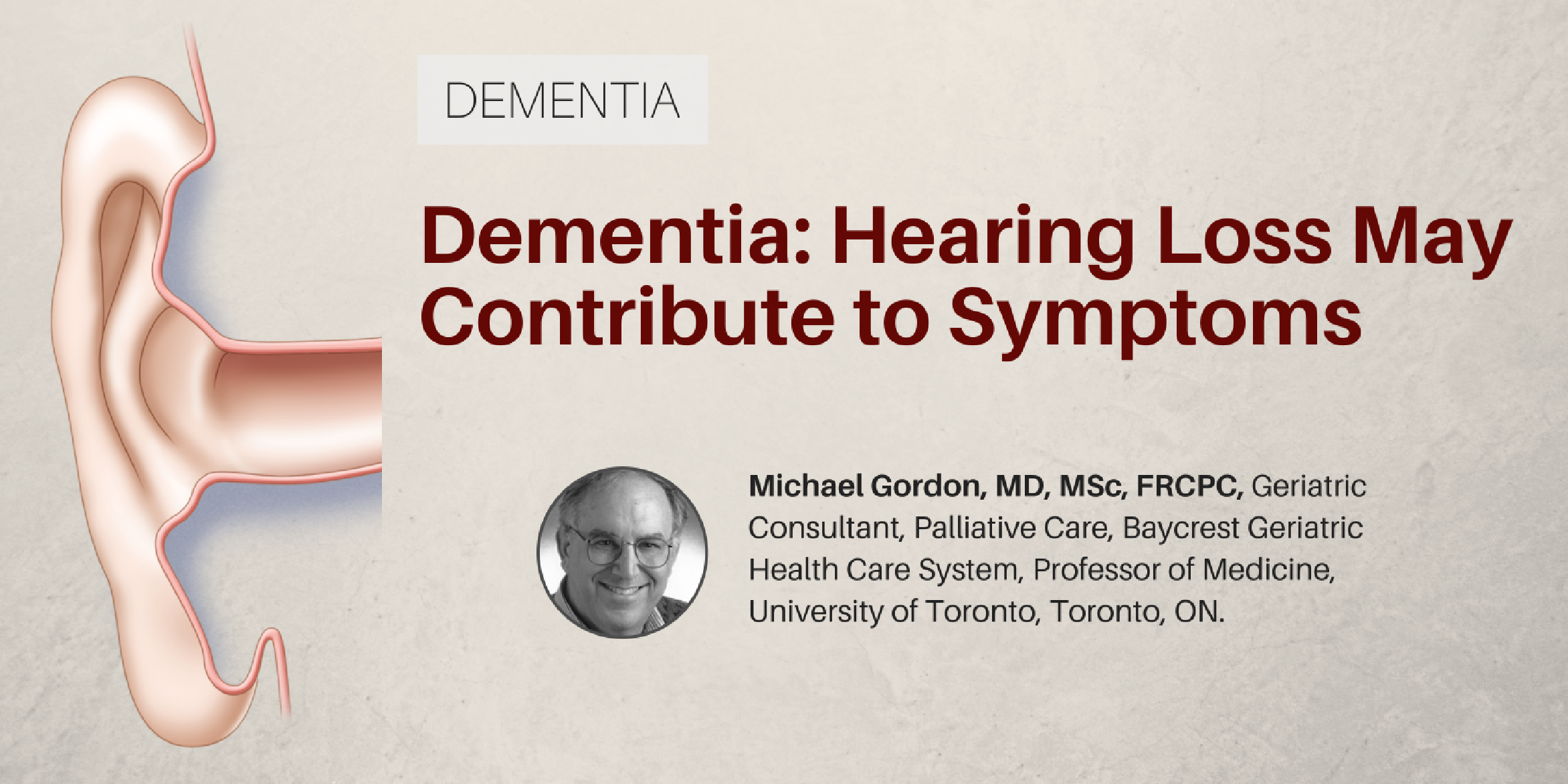
Dementia: Hearing Loss May Contribute to Symptoms

Teaser: 

Michael Gordon, MD, MSc, FRCPC,

Medical Program Director, Palliative Care, Baycrest Geriatric Health Care System, Professor of Medicine, University of Toronto, Toronto, ON.

CLINICAL TOOLS

Abstract: Dementia and hearing loss are both prevalent in older people. Until relatively recently there was little appreciation of their possible interconnection in terms of cause, effect and relationship between the two conditions other than perhaps the dictum—”if you can’t hear it you can not remember it”. It has now become apparent that there is a more defined relationship in terms of possible causality or at least partial patho-physiological association which makes it more important to define hearing loss early on and address it as part of the strategy to decrease the risk of dementia.
Key Words: Alzheimer’s disease, hearing loss, symptoms
Do not discount hearing loss as part of assessment of the range of cognitive impairment and dementia.
Look for appropriate strategies to address hearing loss in elders with early cognitive impairment who may shun standard hearings aids—use the simpler Pocketalker (R) which may fulfil the important goal of enhancing hearing and communication.
To have access to full article that these tools were developed for, please subscribe. The cost to subscribe is $80 USD per year and you will gain full access to all the premium content on www.healthplexus.net, an educational portal, that hosts 1000s of clinical reviews, case studies, educational visual aids and more as well as within the mobile app.

Advances in Alzheimer's Disease Management

Advances in Alzheimer's Disease Management

Teaser: 

CHAPTER 7: Ethical and clinically humane end-of-life care for those living with dementia
by Michael Gordon


Editors:
Serge Gauthier, McGill University, Montreal, Quebec, Canada
Pedro Rosa-Neto, McGill University, Montreal, Quebec, Canada
Publisher: Future Medicine
Reviewed by: Michael Gordon, MD, MSc, FRCPC, FACP, FRCPEdin
It is always a pleasure to be able to discuss a new book to a receptive audience when I believe the book has something special to offer. When it comes to reviewing books outside the realm of medicine or the medical sciences, reviews often are reflective of the personal and aesthetic views of the reviewer. There are many books written for professional readers on the fringe of medical science that deal with non-clinical aspects of medicine and many that have translated important medical concepts to the lay audience and others in the form of memoirs and novels of the personal and historical type that add a great deal to the general wealth and richness of medicine and the associated medical sciences.

To undertake an academic text book is always a daunting task. Generally if experts and specialists in the field cannot write such a book without the help of others and currently the idea of editors securing experts to write the relevant chapters is a well-accepted methodology for achieving that goal. That being said it becomes the responsibility of the editors to make sure that those that they recruit to write the relevant chapters have the academically sound and clinically and research-based capability of doing so and on top of that have the writing skills to achieve their goal. Moreover, for the chapters to hang together in one strives to have some degree of congruence in the writing approaches and styles, while at the same time promoting the particular capabilities of the writers of each chapter. At the end it is hoped that the chapters hang together into a whole that attracts the reader and provides a perspective on the subject and each of its varied components that would be hard to achieve if the reader decided to explore each of the subject chapters separately without the benefit of them being collated, edited and reference into one easily accessible book.

I am therefore pleased and honoured to not only present the book to subscribers of HealthPlexus.net, Advances in Alzheimer’s Disease Management edited by Serge Gauthier and Pedro Rosa-Neto but to have been one of the contributors. At a time when the knowledge surrounding Alzheimer’s disease and other dementias is on the one hand expanding rapidly from the scientific perspective, for the practicing physician and patient living with dementia and their families, the challenges seems to be overwhelming. There seems to be a huge disconnect between the understanding and scientific progress of the causes in many domains of enquiry and the actual clinical impact that all this new knowledge currently has that physicians in the front lines of care can utilize clinically.

In medicine however, one never knows what key will be the one that opens the door we are all looking to enter. At any given time all we can do is to try and figure out using the best clues and evidence available to know what secrets lay behind that door. The readily accessible E-book format in which Advances in Alzheimer’s disease management is produced allows for a relatively low cost alternative to the usual costs of hard copy texts. The content of the book covers all the main challenging concepts and recommended or best-practices as they exists currently. Obviously in time, perhaps a very short time, some of these will change but for those in the field we all know that many of the concepts and practices have not changed in many years.

The table of contents includes the following subjects by the authors listed next to the chapter titles, with mine at the end. I have been given permission to reproduce my chapter, Ethical and clinically humane end-of-life care for those living with dementia on the HealthPlexus.net website so that subscribers can get a taste of the e-book itself.

1) Genetics of Alzheimer’s disease by Jayashree Viswanathan, Hilkka Soininen & Mikko Hiltunen;
2) Diagnosis of Alzheimer’s disease by Pedro Rosa-Neto, Jared Rowley, Antoine Leuzy, Sara Mohades, Monica Shin, Marina T Dauar and Serge Gauthier
3) Available symptomatic antidementia drugs by Marie-Pierre Thibodeau and Fadi Massoud
4) New drugs under development for Alzheimer’s disease by Lezanne Ooi, Kirubakaran Shanmugam, Mili Patel, Rachel Debono and Gerald Münch
5) Management of agitation and aggression: controversies and possible solutions by Clive Ballard and Anne Corbett
6) Guidelines for the diagnosis and treatment of Alzheimer’s disease by Serge Gauthier and Christopher JS Patterson
7) Ethical and clinically humane end-of-life care for those living with dementia by Michael Gordon

For those interested in ordering the book, this can be done through the following links:
The direct URL for the book is:
http://www.futuremedicine.com/doi/book/10.2217/9781780840840

For those who are interested in finding more information about the book/our e-book series, the email address is:
info@futuremedicine.com
For those who wish to place an order, the email is:
sales@futuremedicine.com

The Launch of the Dementia Educational Resource: Interview With the Editor-in-Chief Dr. Michael Gordon

The Launch of the Dementia Educational Resource: Interview With the Editor-in-Chief Dr. Michael Gordon

Teaser: 


Michael Gordon, MD, MSc, FRCPC, FACP, FRCPEdin
Geriatrician, ethicist, educator, speaker, author.

Following on the footsteps of the recent announcement of the launch of the Dementia Educational Resource, www.HealthPlexus.net recently interviewed Dr. Michael Gordon who was appointed as Editor-in-Chief for the newly re-focused educational channel. Dr. Barry Goldlist asked Dr. Gordon a few questions about the format and the plans for this project.

Assault as Treatment: Mythology of CPR in End-of-Life Dementia Care

Assault as Treatment: Mythology of CPR in End-of-Life Dementia Care

Teaser: 

Many people have come to view cardiopulmonary resuscitation (CPR) as a routine intervention following cardiac arrest, and they insist on CPR for their loved ones even when the physician explains its likely futility. Physicians who refuse a family member’s request to perform unwarranted CPR risk becoming the center of media, legal, and disciplinary scrutiny. Although CPR is largely perceived as a benign life-saving intervention, it inflicts indignity and possibly pain on a dying patient and should not be used when it is unlikely to succeed or to benefit the patient if successful. The growing acceptance of do-not-resuscitate orders for patients with advanced cancer has not spread to families of patients suffering from the late stages of other degenerative or terminal illnesses. Having blunt discussions about the true consequences and risks of CPR might foster greater willingness to abstain from administering CPR to patients unlikely to benefit.

This article was originally published by HMP Communications LLC (Annals of Long-Term Care: Clinical Care and Aging), 05/16/2011.

Nutrition and Dementia: A Clinical Update

Nutrition and Dementia: A Clinical Update

Members of the College of Family Physicians of Canada may claim one non-certified credit per hour for this non-certified educational program.

Mainpro+® Overview
Teaser: 

Guylaine Ferland, PhD,Département de Nutrition, Université de Montréal; Centre de recherche, Institut universitaire de gériatrie de Montréal, Montréal, QC.
Carol E. Greenwood, PhD,Department of Nutritional Sciences, Faculty of Medicine, University of Toronto, and Kunin-Lunenfeld Applied Research Unit, Baycrest, Toronto, ON.
Bryna Shatenstein, PhD, PDt, Département de Nutrition, Université de Montréal; Centre de recherche, Institut universitaire de gériatrie de Montréal, Montréal, QC.

Abstract
While prospective epidemiologic studies have provided strong evidence linking higher intakes of many nutrients with slower rates of cognitive decline and reduced dementia risk, randomized controlled trials on supplementation with individual nutrients have largely been disappointing. In contrast, recent research points to substantial benefits for brain aging and cognition from consumption of a varied diet centred on plant-source foods, whole grains and fish, and avoidance of foods rich in saturated and trans fats. An unhealthy dietary pattern, in conjunction with obesity, low physical activity, and smoking, could contribute to a pro-inflammatory state and oxidative stress which could exacerbate risk for development of cognitive decline the metabolic syndrome, diabetes, and cardiovascular disease.
Keywords: nutrition, dementia, Alzheimer's disease, nutrients, dietary patterns.

Screening for Dementia: First Signs and Symptoms Reported by Family Caregivers

Screening for Dementia: First Signs and Symptoms Reported by Family Caregivers

Teaser: 

Mary A. Corcoran, OTR, PhD, Professor of Clinical Research and Leadership, The George Washington University, School of Medicine and Health Sciences, Washington, DC, USA.

There is an average delay of 20 months between the first recognition of symptoms of Alzheimer’s disease or a related disorder (ADRD) and the seeking of physician help. One reason for this delay is tendency for families to miss early symptoms until the onset of behavioural disturbances. Families may provide more timely accounts with prompted questions. It is important to diagnose cognitive impairment early since there are potential benefits to early treatment. The purpose of this article is to help guide caregivers in identifying a list of symptoms that reflect first indicators of ADRD, based on a study of 68 spouse caregivers of patients with ADRD.
Key words: Alzheimer’s disease, dementia, caregivers, diagnosis, primary care.

How to Bathe a Person with Dementia: An Evidence-Based Guide

How to Bathe a Person with Dementia: An Evidence-Based Guide

Teaser: 

Ellen Costello, PT, PhD, Assistant Professor of Physical Therapy, The George Washington University, School of Medicine and Health Sciences, Washington, DC, USA.
Mary A. Corcoran, OTR, PhD, Professor of Clinical Research and Leadership, The George Washington University, School of Medicine and Health Sciences, Washington, DC, USA.

Bathing individuals with dementia has been reported as one of the most difficult activities of daily living and often results in unwanted behaviours. A review of the literature on bathing practices for those with dementia resulted in few empirically tested bathing techniques. Based on this review and the authors’ clinical experience, the following guidelines are presented: (1) consider a towel/bed bath in lieu of a shower/tub bath—be flexible; (2) educate the caregiver (improved outcomes are noted)—communication is key; and (3) optimize the environment to meet the needs of the individual and to maintain safety.
Key words: dementia, Alzheimer’s disease, bathing, caregiver, hygiene.

Practical Approach to the Use of Cholinesterase Inhibitors in Patients with Early Alzheimer’s Disease

Practical Approach to the Use of Cholinesterase Inhibitors in Patients with Early Alzheimer’s Disease

Teaser: 

David B. Hogan, MD, FRCPC, Professor and Brenda Strafford Foundation Chair in Geriatric Medicine, University of Calgary, Calgary, AB.

Cholinesterase inhibitors are a treatment option for most people with Alzheimer’s disease of mild to moderate severity. This article offers an approach to their use, based on the recommendations of the Third Canadian Consensus Conference on the Diagnosis and Treatment of Dementia. Treatment decisions must be individualized. Monitoring includes evaluating both safety and effectiveness, which entails more than just assessing cognition. Treatment is clinically beneficial when there is evidence of improvement, stabilization, or a slowing of the rate of decline seen prior to the start of treatment without unacceptable side effects.
Key words: dementia, Alzheimer’s disease, cholinesterase inhibitors, safety, effectiveness.

Cognitive Dysfunction among Older Adults with Diabetes

Cognitive Dysfunction among Older Adults with Diabetes

Teaser: 

Hsu-Ko Kuo, MD, MPH, Department of Geriatrics and Gerontology, National Taiwan University; Department of Internal Medicine, National Taiwan University Hospital, Taipei, Taiwan.
Yau-Hua Yu, DDS, DMSc, Department of Medical Research, Veterans General Hospital, Taipei, Taiwan.
Shin-Yu Lien, BS, School of Nursing, Chang Gung University, Taoyuan, Taiwan.
Yi-Der Jiang, MD, PhD, Department of Internal Medicine, National Taiwan University Hospital, Taipei, Taiwan.

There has been a substantial increase in total cases of diabetes mellitus in industrialized countries among older adults. Diabetes mellitus has been increasingly recognized as a risk factor for cognitive impairment and dementia. This article discusses the epidemiological evidence for diabetes to predict Alzheimer’s disease, vascular dementia, and decline in various domains of cognition. We also address the features of diabetes-related executive dysfunction and its importance in the clinical care of diabetic older adults.
Key words: diabetes mellitus, cognition, Alzheimer’s disease, vascular dementia, frontal executive dysfunction.