Improving Quality of Life with Neuromodulation: A Novel Treatment for Incontinence

KEY POINTS / CLINICAL PEARLS

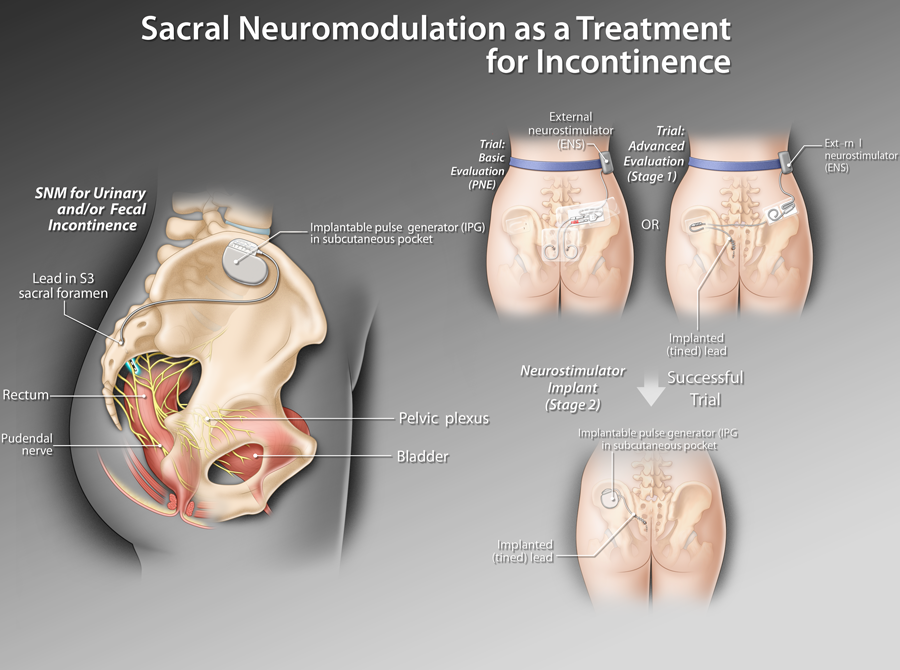
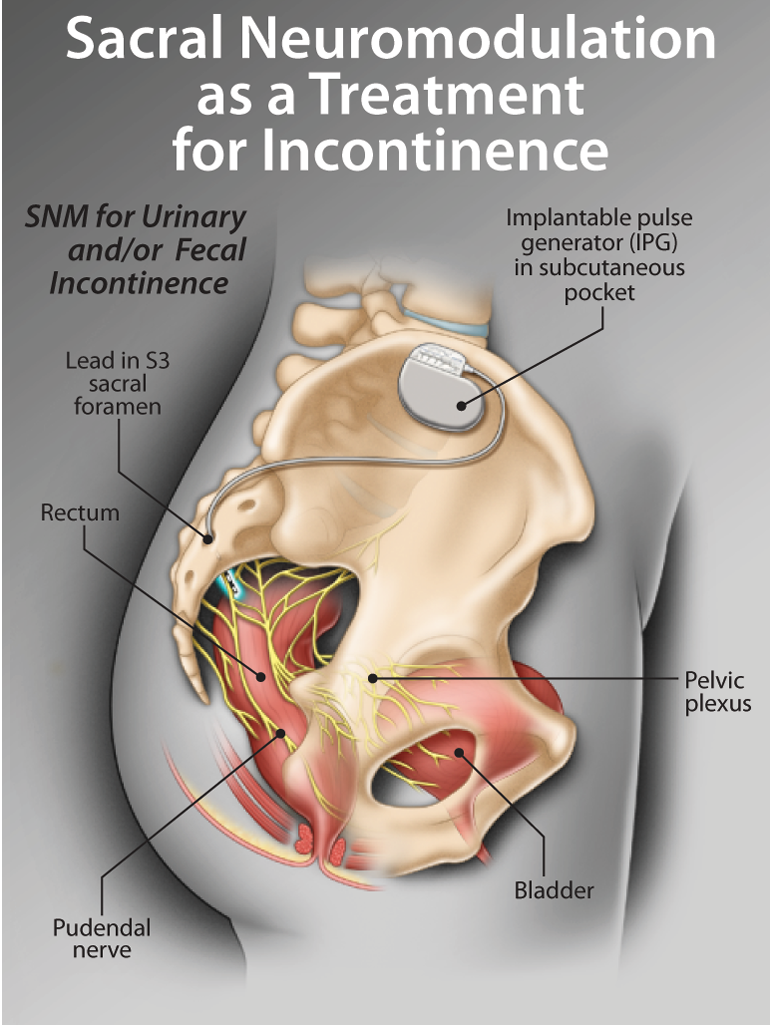
Sacral neuromodulation (SNM) is peripheral nerve stimulation used for the treatment of overactive bladder (OAB) and fecal incontinence.
SNM is recommended by both the American Urological Association (AUA) and the Canadian Urological Association (CUA) as third-line therapy for the treatment of OAB.
Given the large number of implantations and history of SNM, improvements in urinary symptoms are established and of long duration in those who respond to treatment.
SNM use in patients with fecal incontinence is more recent, but several large studies have demonstrated significant improvement in symptoms.
Fecal incontinence and overactive bladder are both debilitating medical conditions that can impair quality of life and limit day-to-day activities.
Sacral neuromodulation is authorized by Health Canada and the FDA as treatment for both bladder and bowel conditions.
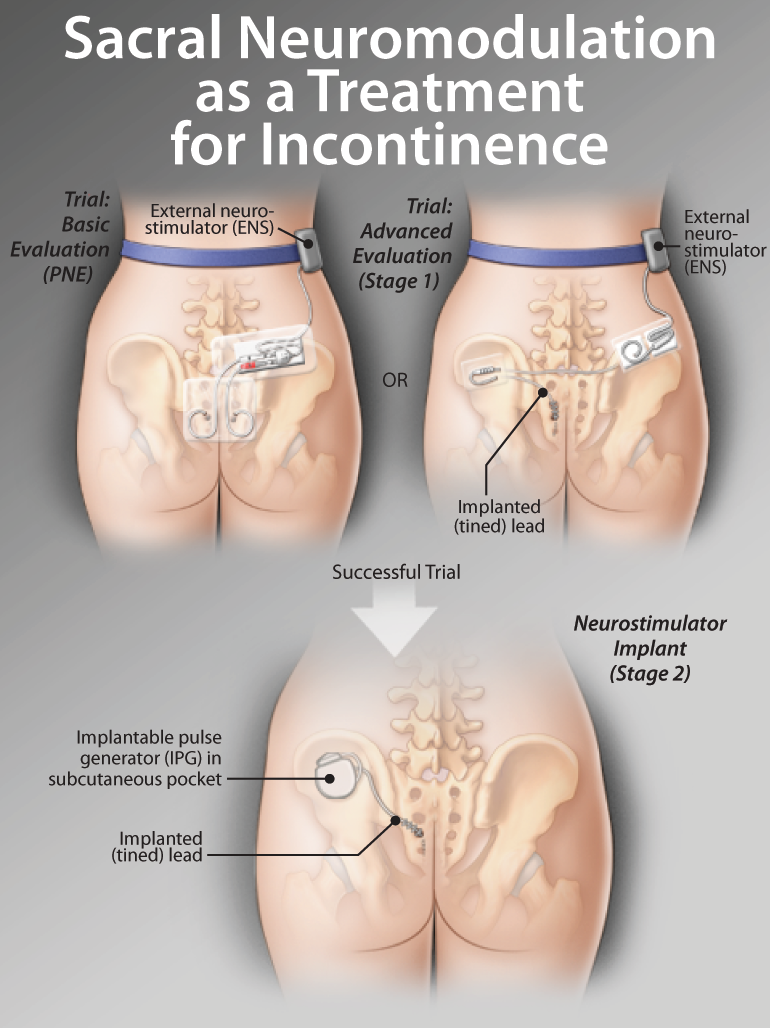
SNM is a minimally invasive out-patient surgery that has consistently been demonstrated to improve symptoms and quality of life in patients with OAB or fecal incontinence.

References

  1. Gormley EA, Lightner DJ, Faraday M, Vasavada SP. Voiding Dysfunction Diagnosis and Treatment of Overactive Bladder (Non-Neurogenic) in Adults: AUA/SUFU Guideline Amendment. JURO. 2015;193(5):1572-1580. doi:10.1016/j.juro.2015.01.087.
  2. Bettez M, Tu LM, Carlson K, et al. 2012 Update: Guidelines for Adult Urinary Incontinence Collaborative Consensus Document for the Canadian Urological Association. CUAJ. 2012;6(5):354-363. doi:10.5489/cuaj.12248.
  3. Saldana Ruiz N, Kaiser AM. Fecal incontinence - Challenges and solutions. WJG. 2017;23(1):11-15. doi:10.3748/wjg.v23.i1.11.
  4. Zbar AP. Sacral neuromodulation and peripheral nerve stimulation in patients with anal incontinence: an overview of techniques, complications and troubleshooting. Gastroenterology Report. 2014;2(2):112-120. doi:10.1093/gastro/gou015.
  5. Thompson JH, Sutherland SE, Siegel SW. Sacral neuromodulation: Therapy evolution. Indian J Urol. 2010;26(3):379-384. doi:10.4103/0970-1591.70576.
  6. Banakhar M, Hassouna M. Percutaneous Nerve Evaluation Test Versus Staged Test Trials for Sacral Neuromodulation: Sensitivity, Specificity, and Predictive Values of Each Technique. Int Neurourol J. 2016;20(3):250-254. doi:10.5213/inj.1630498.249.
  7. Noblett K, Siegel S, Mangel J, et al. Results of a prospective, multicenter study evaluating quality of life, safety, and efficacy of sacral neuromodulation at twelve months in subjects with symptoms of overactive bladder. Neurourol Urodyn. 2014;35(2):246-251. doi:10.1002/nau.22707.
  8. Siegel S, Noblett K, Mangel J, et al. Three-year Follow-up Results of a Prospective, Multicenter Study in Overactive Bladder Subjects Treated With Sacral Neuromodulation. Urology. 2016;94(C):57-63. doi:10.1016/j.urology.2016.04.024.
  9. Siegel S, Noblett K, Mangel J, et al. Results of a prospective, randomized, multicenter study evaluating sacral neuromodulation with InterStim therapy compared to standard medical therapy at 6-months in subjects with mild symptoms of overactive bladder. Neurourol Urodyn. 2014;34(3):224-230. doi:10.1002/nau.22544.
  10. Melenhorst J, Koch SM, Uludag Ö, van Gemert WG, Baeten CG. Sacral neuromodulation in patients with faecal incontinence: results of the first 100 permanent implantations. Colorect Dis. 2007;9(8):725-730. doi:10.1111/j.1463-1318.2007.01241.x.
  11. Janssen PT, Kuiper SZ, Stassen LP, et al. Fecal incontinence treated by sacral neuromodulation: Long-term follow-up of 325 patients. Surgery. 2017;161(4):1040-1048. doi:10.1016/j.surg.2016.10.038.
  12. Lombardi G, Mondaini N, Macchiarella A, Cilotti A, Popolo GD. Clinical Female Sexual Outcome after Sacral Neuromodulation Implant for Lower Urinary Tract Symptom (LUTS). J Sex Med. 2008;5(6):1411-1417. doi:10.1111/j.1743-6109.2008.00812.x.
  13. Signorello D, Seitz CC, Berner L, et al. Impact of Sacral Neuromodulation on Female Sexual Function and His Correlation with Clinical Outcome and Quality of Life Indexes: A Monocentric Experience. J Sex Med. 2011;8(4):1147-1155. doi:10.1111/j.1743-6109.2010.02189.x.
  14. Johnson BL, Abodeely A, Ferguson MA, Davis BR, Rafferty JF, Paquette IM. Is Sacral Neuromodulation Here to Stay? Clinical Outcomes of a New Treatment for Fecal Incontinence. J Gastrointest Surg. 2014;19(1):15-20. doi:10.1007/s11605-014-2611-4.
  15. Hijaz A, Vasavada SP, Daneshgari F, Frinjari H, Goldman H, Rackley R. Complications and troubleshooting of two-stage sacral neuromodulation therapy: a single-institution experience. Urology. 2006;68(3):533-537. doi:10.1016/j.urology.2006.03.020.
Disclaimer: 

This article was published as part of Managing the Health of Your Aging Patient: Therapies that Could Help Improve Quality of Life eCME resource.
The development of Managing the Health of Your Aging Patient: Therapies that Could Help Improve Quality of Life eCME resource was supported by an educational grant from Medtronic Canada.