
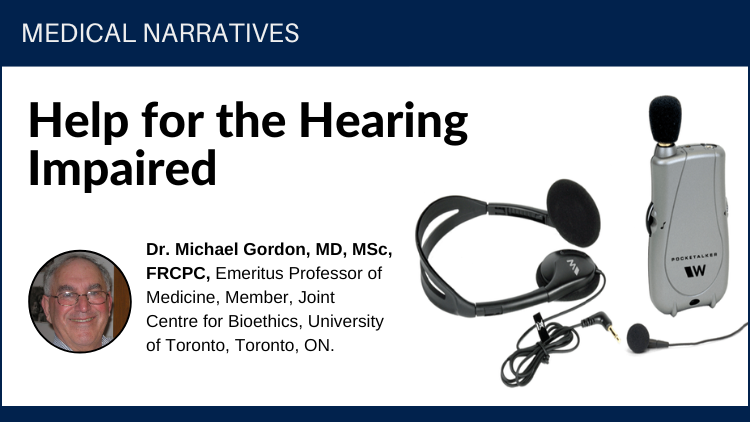
Case Study
Mrs. MV (permission given for publication) was being evaluated at a memory clinic. She was 93 years old with several years of cognitive decline. She had very devoted daughter who did everything possible to make sure she was safe and secure in her own home. She was determined to try and maintain her at home as much as possible as per her mother’s wishes. This meant that the daughter had little time for herself as her mother would get anxious when she was away from the home: not always remembering the communication as to where her daughter had gone. The patient was unable to tolerate donepezil but did tolerate memantine and the daughter felt that her mother was more engaged and alert than prior to the use of the medication. During my initials assessment I noted that as I spoke to her, she turned her head (ear side) towards me, a reasonably reliable indicator of hearing impairment. I asked her if she had any problems with hearing which she denied. I explained to the daughter that hearing impairment is a risk factor for cognitive impairment and “if you didn’t hear it, you can’t remember it” explaining why sometimes a causality of lack of recall is due to not hearing the item that is to be recalled.
She was referred for audiology assessment and indeed she had substantial bilateral impairment. There turned out to be a problem in fitting her with a hearing aid because of the smallness of her ear canal and the concern by the daughter that she would not remember the steps in putting the aids in and out of the charger and inserting them in her ears as she only had a PSW three times, soon to be reduce to twice weekly.
